
Peterson Academy Introduction to Music Theory with Samuel Andreyev
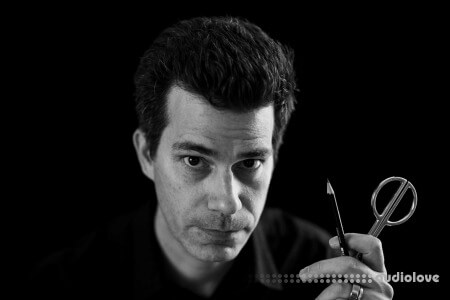
In Introduction to Music Theory, an eight-hour course, Samuel Andreyev takes us through the foundations of Western music theory, from the five-line staff system and rhythmic notation to pitch, intervals, scales, and harmony. We examine how music creates movement through consonance and dissonance, cadences, voice leading, and formal structures, while developing practical skills like ear training and score analysis.
The course emphasizes that music theory serves as a descriptive language rather than prescriptive rules, enabling musicians to communicate across time and cultures while acknowledging that notation remains an abstraction of embodied musical experience.
1. The Language of Music
In our introductory lecture, we explore the principles of Western musical notation, examining how this 2,000-year-old tradition represents a codified body of practices that could disappear if not continuously transmitted. We delve into the five-line staff system, various clefs, note values, rhythmic notation, and the historical development of these elements as solutions to the challenge of representing ephemeral sounds in written form. Ultimately, Samuel Andreyev emphasizes that music theory is descriptive rather than prescriptive, serving as a valuable inheritance that enables musicians to communicate across time and cultures.
2. The Time of Music
In lecture two, we study the complexities of music notation, specifically focusing on rhythm and how it is represented through time signatures, meter, and various notational conventions. We examine the limitations of mensural notation in capturing rhythmic feel and gesture, introducing concepts like binary and ternary meters, compound time signatures, tuplets for irrational rhythms, and dotted notes for extending durations. The lecture emphasizes that while notation provides a powerful system for encoding musical ideas, it remains an abstraction that cannot fully capture the embodied, cultural aspects of rhythm found in various musical traditions from Viennese waltzes to Balkan folk music.
3. Pitch and Intervals
In lecture three, we turn to the fundamentals of pitch notation and intervals in Western music, examining how accidentals (sharps, flats, and naturals) modify the seven basic notes of diatonic scales and how intervals are classified as major, minor, perfect, augmented, or diminished based on their size and quality. We delve into the differences between major and minor scales, focusing on their distinct patterns of whole tones and semitones, and discuss important concepts like the leading tone and its role in creating harmonic tension and resolution. Andreyev concludes by emphasizing the importance of developing practical musicianship skills through ear training and regular practice to internalize these theoretical concepts.
4. Keys and Harmony
In lecture four, we learn more advanced concepts of Western music theory, including key signatures, the circle of fifths, and chord construction, showing how these elements enable harmonic movement and musical storytelling. We examine how keys center around tonic notes, how the circle of fifths links keys, and how triads form basic harmonic units that can be inverted and altered to create major, minor, augmented, and diminished qualities. The lecture also introduces harmonic functions and chord progressions, explaining how they generate tension and resolution, allowing composers to craft musical narratives from simple three-chord patterns to complex symphonic movements.
5. Motion in Music
In lecture five, Samuel Andreyev explains the concept that music inherently wants to move, examining how music expresses ideas of movement through both literal embodied motion and sublimated forward progression. We delve into the mechanics of harmonic motion through consonance and dissonance, where consonance represents stability while dissonance creates a need for movement or resolution, and analyze various types of cadences that function as musical punctuation. The lecture concludes with an exploration of voice leading principles in four-part harmony, emphasizing smooth movement between chords, proper voice spacing, and the avoidance of forbidden parallels to maintain the independence of individual voices.
6. Structure in Music
In lecture six, we explore how music creates movement, from small-scale elements like duration, pulsed versus unpulsed rhythms, and ornaments such as grace notes, to large-scale forms including binary, ternary, rondo, and sonata structures. We examine how tonal polarity between tonic and dominant drives these forms, generating tension and release through exposition, development, and recapitulation. The discussion highlights how rhythmic and formal principles create musical trajectories that connect to our embodied perception of music and vary across different musical cultures and historical periods.
7. Musical Exercises
In lecture seven, Samuel Andreyev presents practical skills that connect theory to performance, focusing on ear training exercises such as rhythmic, melodic, and harmonic dictation, as well as rhythmic clapback. We learn techniques for externalizing musical ideas on voice or instrument, highlighting that these skills—linking eyes, ears, and physical performance—are essential for all musicians across genres and can be developed with consistent practice. The session concludes with exercise demonstrations, resource recommendations, and discussion of perfect pitch and active listening.
8. Musical Appreciation
In our eighth and final lecture, we utilize what we learned throughout the course by applying music theory fundamentals to the study of Bach's four-part chorales, focusing on how to develop polyphonic listening and analytical skills. We examine how to break down complex musical textures by isolating individual vocal lines, analyzing cadences, and understanding harmonic progressions. Our course concludes with a discussion of musical appreciation and personality traits as they relate to musical preferences, highlighting the balance between technical understanding and intuitive musical experience.
Home page
DOWNLOAD